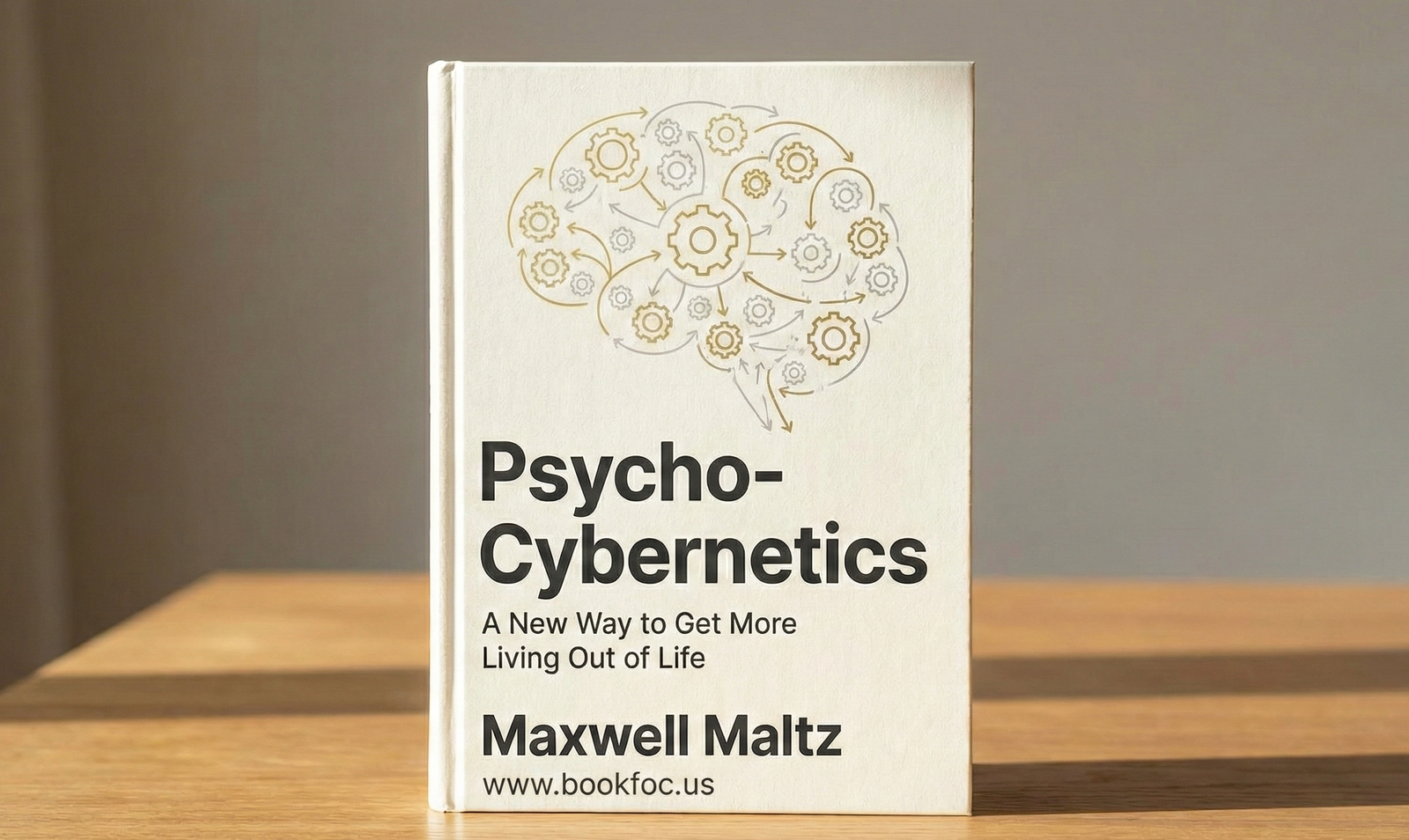
Published in 1960, Psycho-Cybernetics by Dr. Maxwell Maltz remains one of the most influential self-help books ever written. Maltz, a plastic surgeon, noticed a phenomenon that defied medical logic: many patients who underwent successful surgery to correct physical "flaws" still felt ugly, shy, and unworthy.
He concluded that their "internal map" - the Self-Image - had not been operated on. This led to the discovery that the human brain and nervous system act as a "servo-mechanism" that can be programmed for success or failure.
1. The Self-Image: Your Invisible Boundary
The most important discovery of modern psychology is the self-image. It is the "blueprint" of the person you believe yourself to be. Every action, feeling, and experience you have is consistent with this image.
- The Limit: You cannot out-earn or out-perform your self-image. If you see yourself as a "C student," no amount of late-night studying will move you to an A permanent grade until the image changes.
- The Automatic Pilot: Once the self-image is set, your subconscious works to keep you within that comfort zone, even if that zone is painful or limiting.
2. Your Brain as a "Success Mechanism"
Maltz uses the term "Cybernetics" (the study of control systems) to describe how the brain works. He argues that your brain doesn't think; it reacts to the goals you give it.
"A human being is always a goal-striver. You are built as a goal-striving mechanism which is set in motion by 'Goals' or 'End-Results' which you provide."
Like a torpedo searching for a target, your brain will "zig-zag" through mistakes, using them as feedback to correct its course toward the goal you have visualized. If you visualize failure, it will hit that target with equal precision.
3. Theater of the Mind: The Science of Visualization
This is the core "how-to" of the book. Maltz discovered that the human nervous system cannot tell the difference between a real experience and an experience imagined vividly and in detail.
To change your life, you must spend 15–30 minutes a day in the "Theater of the Mind":
- Mental Rehearsal: Close your eyes and see yourself acting and reacting as the person you want to become. Don't just "see" it - feel the textures, hear the sounds, and feel the confidence.
- Success Scars: By practicing in your mind, you create "synthetic memories." Your brain begins to believe you have actually succeeded before, making the real-life action feel natural.
4. The S.U.C.C.E.S.S. and F.A.I.L.U.R.E. Mechanisms
Maltz provides acronyms to help readers identify which "mechanism" they are currently operating in:
| The SUCCESS Instinct | The FAILURE Instinct |
|---|---|
| Sense of Direction | Frustrated / Fearful |
| Understanding | Aggressiveness (Misdirected) |
| Courage | Insecurity |
| Charity / Compassion | Loneliness |
| Esteem | Uncertainty |
| Self-Confidence | Resentment |
| Self-Acceptance | Emptiness |
5. How to De-Hypnotize Yourself
Many of us are "hypnotized" by the belief that we are "not good enough" or "incapable." These are not facts; they are opinions we have accepted as truth. Maltz suggests we aggressively challenge these beliefs:
When you feel a negative thought, ask: "Why do I believe this? Is there any actual proof, or have I just accepted it?" By realizing that your limitations are often just bad programming, you can begin to overwrite the code.
Final Takeaway for BookFoc.us Readers
Your past does not define your future - your self-image does. You are not a machine, but you have a machine inside you that you can learn to operate. By changing your mental blueprint through visualization and forgiveness, you can literally reprogram your destiny.
Have you read Psycho-Cybernetics?
Share your journey with us on Instagram @bookfocus_ and join a community of readers committed to continuous improvement.